
The Great Footwear Debate: Hiking Boots vs. Trail Runners
A comparison guide between heavy leather boots, mid-weight hikers, and lightweight trail runners. Explain concepts like "heel drop," "toe box width," and "lug depth."
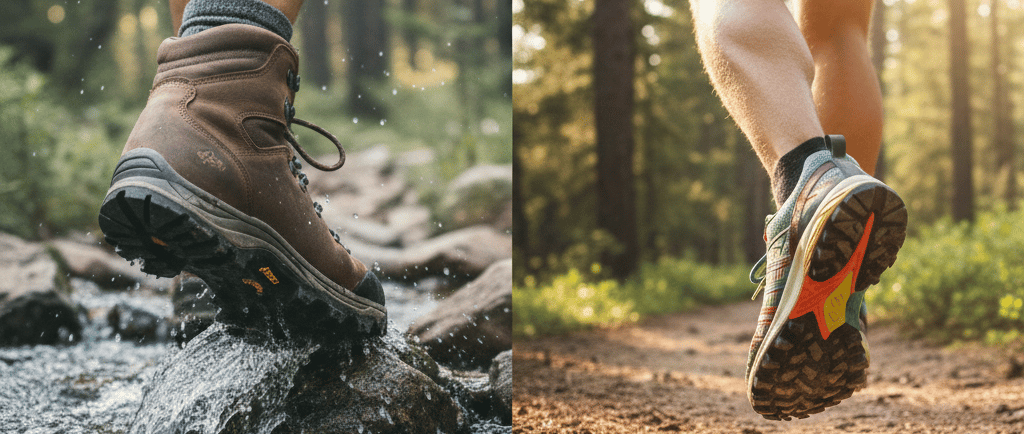
It’s the most debated topic at any trailhead: should you stick with the classic, rugged hiking boot, or make the switch to lightweight trail runners? Your choice in footwear is the single most important gear decision you’ll make, as it directly impacts your comfort, pace, and whether or not you end up with "hiker’s toenail."
There is no "perfect" shoe for everyone, but there is a perfect shoe for your specific trip. Let’s break down the pros and cons.
The Case for Hiking Boots
Hiking boots are the traditional choice for a reason. They are built for durability and protection.
Pros:
Ankle Support: Higher cuffs help prevent rolls on uneven, rocky terrain.
Protection: Thick soles and rubber toe caps protect your feet from sharp rocks and "trail kicking."
Longevity: A high-quality leather boot can last for 1,000+ miles and often be resoled.
Cons:
Weight: "A pound on your feet equals five on your back." They are heavy and can lead to leg fatigue.
Breathability: Even with "waterproof-breathable" liners, boots tend to run hot and take a long time to dry once wet.
The Case for Trail Runners
In recent years, trail runners have become the go-to for thru-hikers. They are essentially reinforced running shoes with aggressive tread.
Pros:
Weight: They are incredibly light, allowing for a faster, more nimble gait.
Breathability: Mesh uppers allow feet to breathe and, more importantly, dry quickly after stream crossings.
No Break-In: Most trail runners are comfortable straight out of the box.
Cons:
Durability: You’ll be lucky to get 400–500 miles out of a pair before the foam compresses and the mesh tears.
Less Support: They offer very little lateral ankle stability.
Technical Terms You Should Know
When shopping, you'll encounter these three terms. Here’s what they actually mean:
Heel-to-Toe Drop: The difference in height between the heel and the forefoot. A "Zero Drop" shoe mimics a natural barefoot stride, while a traditional drop (8mm–12mm) can reduce strain on the Achilles.
The Toe Box: Look for a "wide toe box." Your feet will swell as the day progresses; you need room for your toes to splay naturally to avoid blisters.
Lugs: These are the "teeth" on the bottom of the shoe. Deep lugs ($5mm+$) are better for mud and loose dirt, while shallower lugs are better for hard-packed trails.
As an Amazon Associate I earn from qualifying purchases.
© 2026. All rights reserved.


Gear Up. Head Out. Hike On.