
The "Green" Hiker: Evaluating the Carbon Footprint of Your Gear and How to Shop More Sustainably
From the petroleum in your rain shell to the methane from your base layers, your gear has a hidden history. We’re breaking down the climate math of your backpack and sharing five ways to shop smarter in 2026.
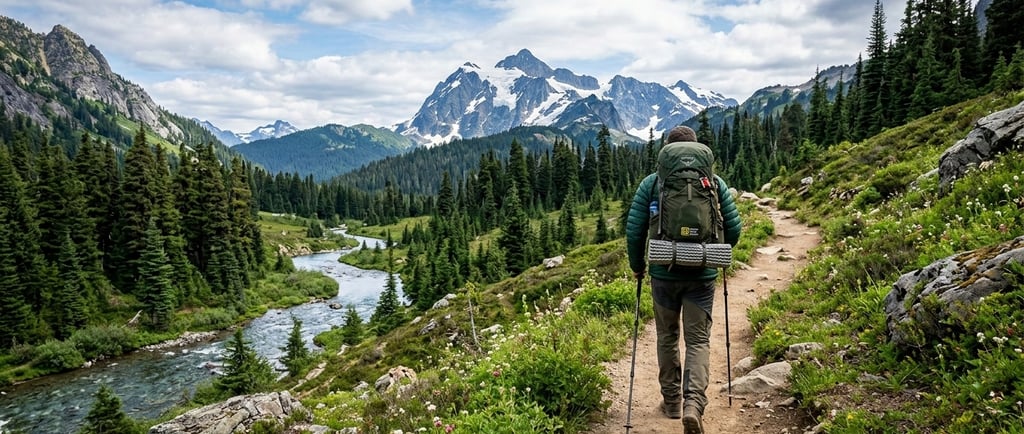
We’ve all heard the mantra: "Leave No Trace." We pack out our trash, stay on the switchbacks, and treat water sources with respect. But for the modern hiker, the impact starts long before we lace up our boots.
Every piece of equipment we carry—from that ultralight tent to your moisture-wicking socks—comes with a "hidden" carbon cost. If we want to truly protect the wild places we love, we have to look at the gear in our closets.
The Hidden Math: What is "Embodied Carbon"?
Most hikers think about their footprint in terms of the gas used to drive to the mountains. While transportation is often the largest single impact of a trip, the embodied carbon of your gear is the silent runner-up.
Embodied carbon is the total greenhouse gas emissions generated during a product’s entire life cycle:
Raw Materials: Extracting petroleum for synthetic fibers (nylon/polyester) or the methane produced by livestock for wool and down.
Manufacturing: The energy-heavy process of weaving, dyeing, and treating fabrics with waterproof coatings.
Distribution: Shipping gear across the globe to reach your local outfitter.
The 2026 Reality Check: Studies show that a single synthetic hiking shirt can emit between 7kg and 18kg of $CO_{2}e$ (carbon dioxide equivalent) before it even reaches your back.
Synthetic vs. Natural: The Sustainability Paradox
Choosing "green" isn't always as simple as picking natural fibers. In 2026, we have more data than ever, and the results are surprising:
How to Shop Like a "Green" Hiker
Being a sustainable hiker doesn't mean you have to stop buying gear; it means shifting your focus from more to better.
1. The Best Gear is the Gear You Already Own
The most sustainable choice is the one that doesn’t require new manufacturing. Before you hit "Buy Now" on that new 2026 model, ask if your current gear can be repaired. Brands like Patagonia, Arc'teryx, and Rab now offer robust repair programs that can add years to a jacket’s life.
2. Look for the "Big Three" Certifications
Greenwashing is everywhere. To cut through the noise, look for these third-party stamps of approval:
Bluesign®: Ensures the chemicals and dyes used are safe for the environment and workers.
Climate Neutral Certified: Confirms the brand measures, offsets, and reduces its entire carbon footprint.
Global Recycled Standard (GRS): Verifies that the "recycled" claim is actually true.
3. Choose "Solution-Dyed" Fabrics
Traditionally, fabric is woven and then dunked in massive vats of dye—a process that uses incredible amounts of water and energy. Solution-dyeing adds the color at the pellet stage before the fiber is even spun. This reduces water use by up to 80% and significantly lowers the carbon footprint of the item.
4. Prioritize Circularity
In 2026, the best brands are designing gear to be "circular." This means when your tent or pack finally dies, it can be fully recycled back into new gear rather than sitting in a landfill. Look for "Endless Promise" collections or similar circularity initiatives.
5. Buy Secondhand First
The "re-commerce" revolution is here. Sites like REI Re/Supply, Geartrade, and Worn Wear allow you to snag high-end technical gear at a fraction of the carbon (and financial) cost.
Final Thoughts
The goal isn't to be a "perfect" environmentalist—it’s to be a conscious one. By choosing gear that lasts longer, repairing what breaks, and supporting brands that prioritize the planet over fast-fashion cycles, we ensure that the trails we love stay green for generations to come.
Next time you’re at the outfitter, don’t just look at the weight on the tag—look at the footprint.
As an Amazon Associate I earn from qualifying purchases.
© 2026. All rights reserved.


Gear Up. Head Out. Hike On.